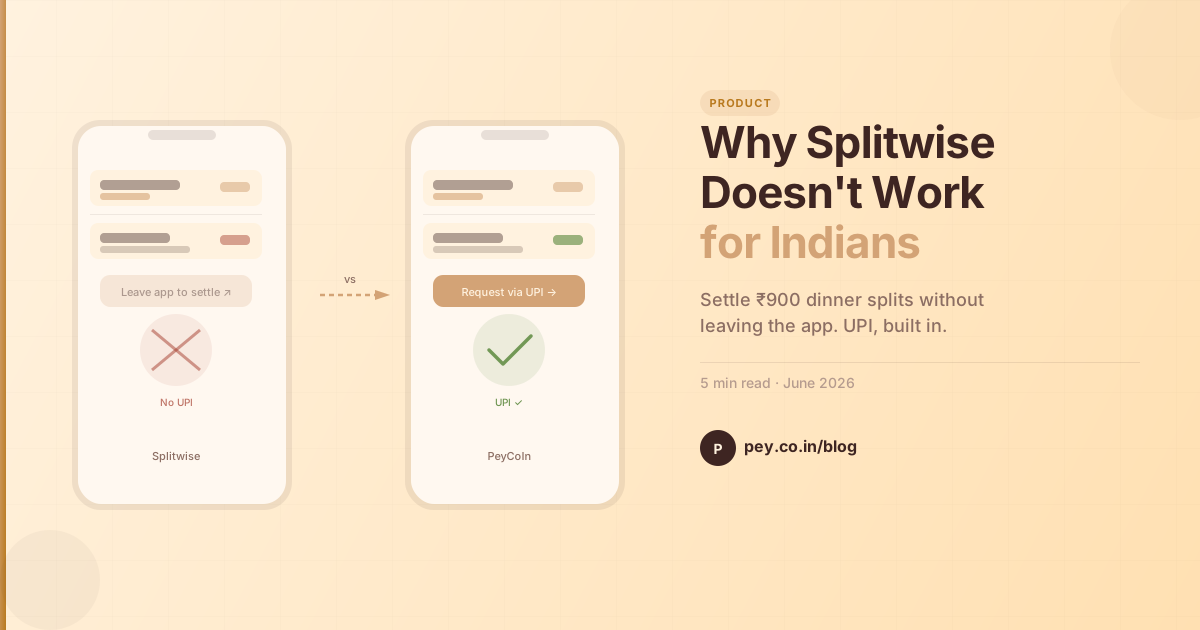
You've just had dinner with four friends. The bill was ₹3,600. You paid. Everyone else owes you ₹900.
In Splitwise, the balance is logged perfectly. Now comes the part Splitwise can't help you with: actually getting paid.
Here's what happens next:
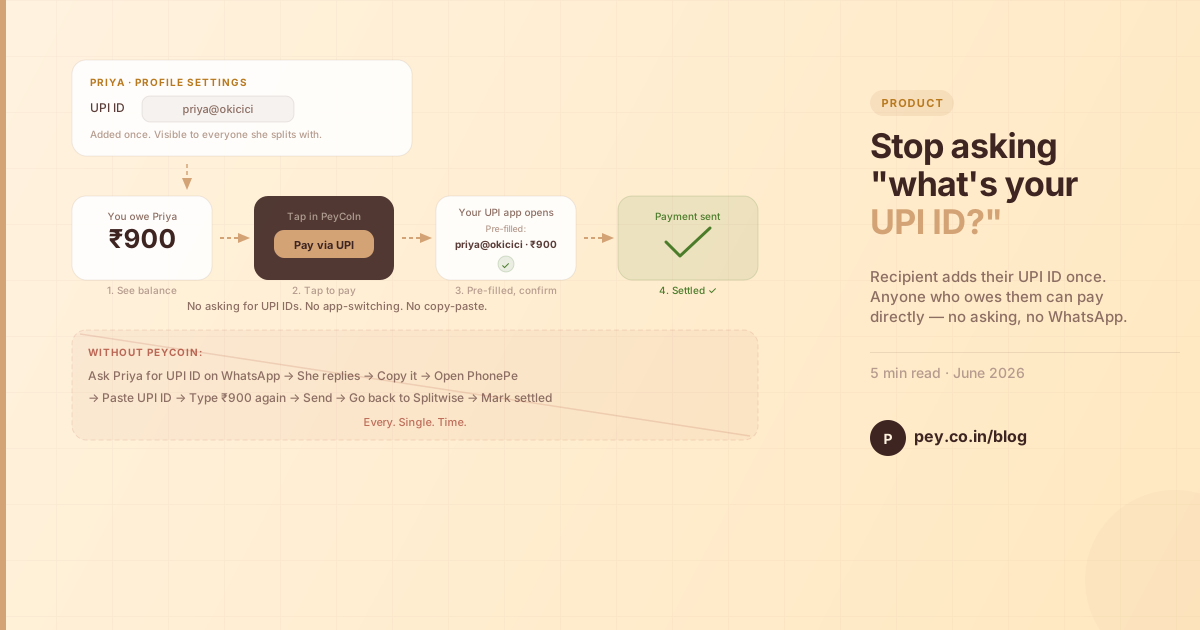
- You message the group chat: "Settle up! Priya, Rahul, Ankit — ₹900 each."
- Someone asks: "What's your UPI ID?"
- You reply with your UPI ID.
- They copy it, open PhonePe, paste it, type ₹900, and send.
- You go back to Splitwise and manually mark them as settled.
- Repeat for each person.
Every single time. For every group expense. For every friend.
This is the settlement problem in India. And nobody had fixed it — until PeyCoIn.
The fix: add your UPI ID once
In PeyCoIn, the person who is owed money adds their UPI ID to their profile once. That's it. It's saved. It's there for every future expense, every group, every settlement — forever.
Now when anyone owes them money, the flow looks like this:
- Open PeyCoIn, see the balance — "You owe Priya ₹900"
- Tap Pay via UPI
- Your UPI app opens — pre-filled with Priya's UPI ID and ₹900 already in the amount field
- You confirm. Payment sent.
No WhatsApp. No copy-pasting a UPI ID. No re-entering the amount. No hunting through chat history to find what they sent you six weeks ago. The UPI ID is already there because Priya added it once.
Why "pay" not "request"
You might wonder why PeyCoIn lets the payer initiate the UPI flow rather than the payee sending a payment request. It's a deliberate choice, and it reflects how people actually behave.
Sending a payment request to someone puts them on the spot — it can feel aggressive, especially in Indian social contexts where asking directly for money carries awkwardness. The polite pattern is: the person who owes money pays when they're ready, not when they receive a nudge.
PeyCoIn respects that. The balance is visible. The UPI ID is available. The payer can settle when they choose — without anyone having to send a formal request. The social friction of "asking for money" disappears because the information is just there.
What PeyCoIn does not do
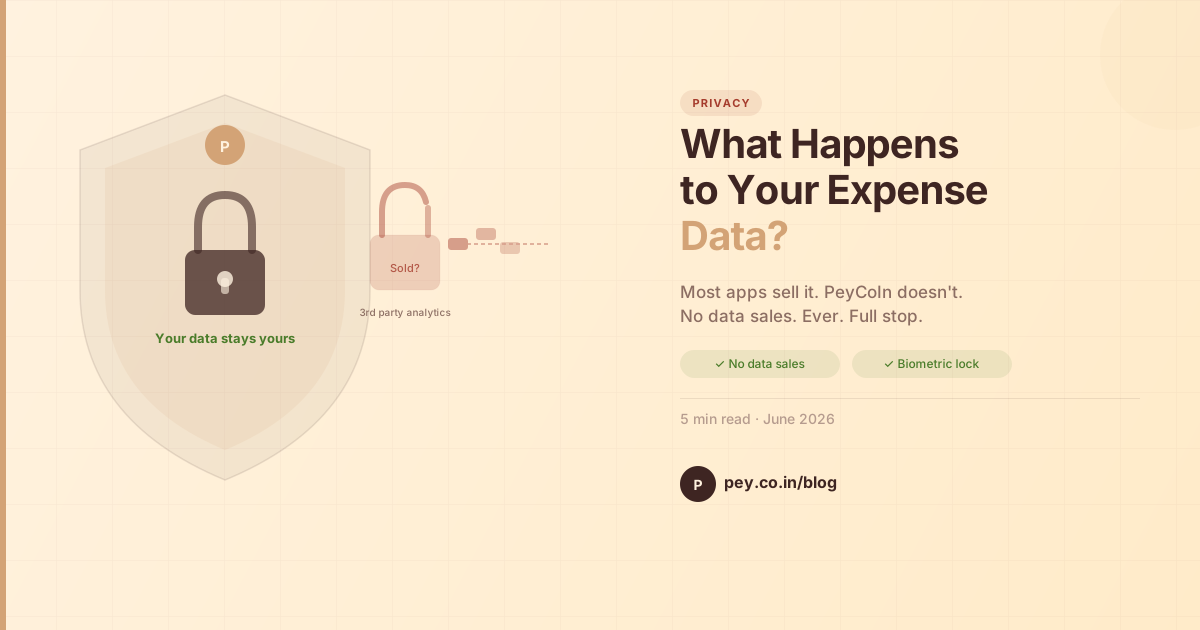
PeyCoIn does not process payments. We don't hold funds, touch your bank account, or sit between you and the transaction. When you tap "Pay via UPI," your own UPI app handles everything — PhonePe, Google Pay, BHIM, whatever you have. Your bank's UPI rails process the payment. PeyCoIn just makes sure the right UPI ID is in the right place so you never have to ask for it.
This also means there's no new payment credential to trust PeyCoIn with. Your biometric, your PIN, your bank authentication — all of it stays inside your UPI app, exactly where it should be.
The one thing you need to do
Ask the people you split expenses with to add their UPI ID to their PeyCoIn profile. That's the only setup required. Once they have, every future settlement between you is frictionless — regardless of which group the expense is in or how long ago it was logged.
The people who haven't added their UPI ID yet? You can still see their balance. You'll just settle that one the old way — for now.
Why this matters more than it sounds
The "ask for UPI ID" step sounds trivial. It takes maybe 30 seconds. But multiply it by every group meal, every shared Uber, every trip, every monthly rent cycle — and it adds up to a persistent low-grade friction that makes people delay settling, forget to settle, or just silently absorb the cost to avoid the hassle.
Removing that step doesn't just save time. It removes the excuse to delay. When paying is one tap from the balance screen, people pay.
That's what PeyCoIn is designed to do: make the right thing the easy thing.
About PeyCoIn
PeyCoIn is a free app that combines personal budget tracking and group expense splitting — with UPI-connected settlement, offline-ready access, and zero data sales. Built in India, for India and the world.